
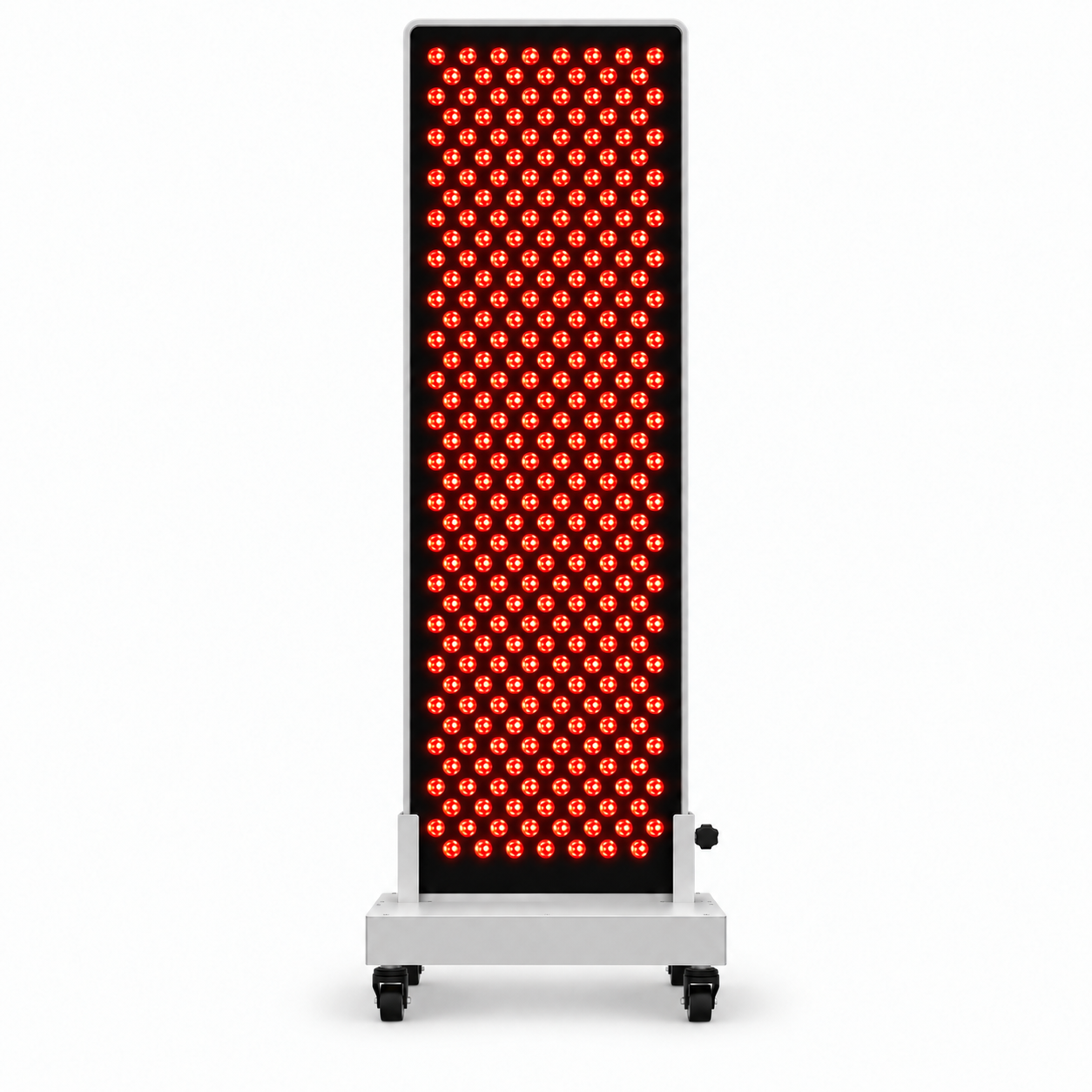

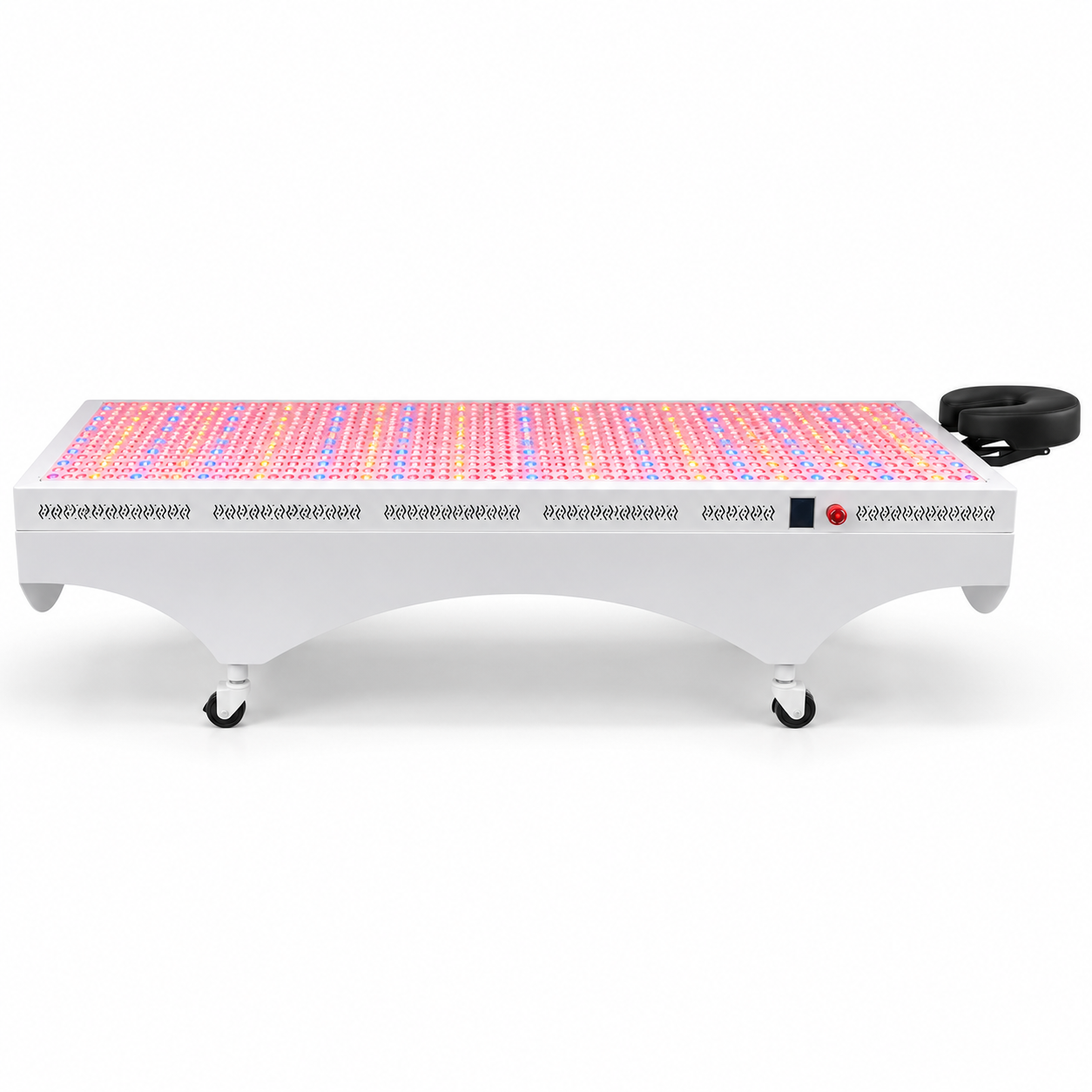


How to Choose a Red Light Therapy Panel: Specifications, Fit, and Evidence
Oct 14,2026 | LumHarbor
Red Light Therapy Panel — Quick Answer
Choose a red light therapy panel by checking what it is intended to do, whether its complete setup fits your space, and what documentation supports its specifications. Separate electrical consumption, optical output, and irradiance rather than treating them as the same measure. Ask where and how an irradiance figure was measured, and what area it represents. A wavelength list or LED count alone cannot establish a clinical result. Before buying, request the exact-model instructions, confirm the supplied stand or mounting arrangement, and check current purchase terms. Discuss relevant skin concerns, light sensitivity, and medicines with a qualified clinician; follow the device’s directions and specified eye protection.
Start with your requirements
Start with three decisions: what you want to use the equipment for, how it can be positioned in your space, and what you need to know before purchasing. Write down requirements that would rule out a setup, such as needing a documented floor stand when wall mounting is unavailable.
Then compare optical information and the evidence for the outcome you care about. Our introduction to red light therapy explains the broader research context. Physical suitability and a supported health claim are separate decisions.
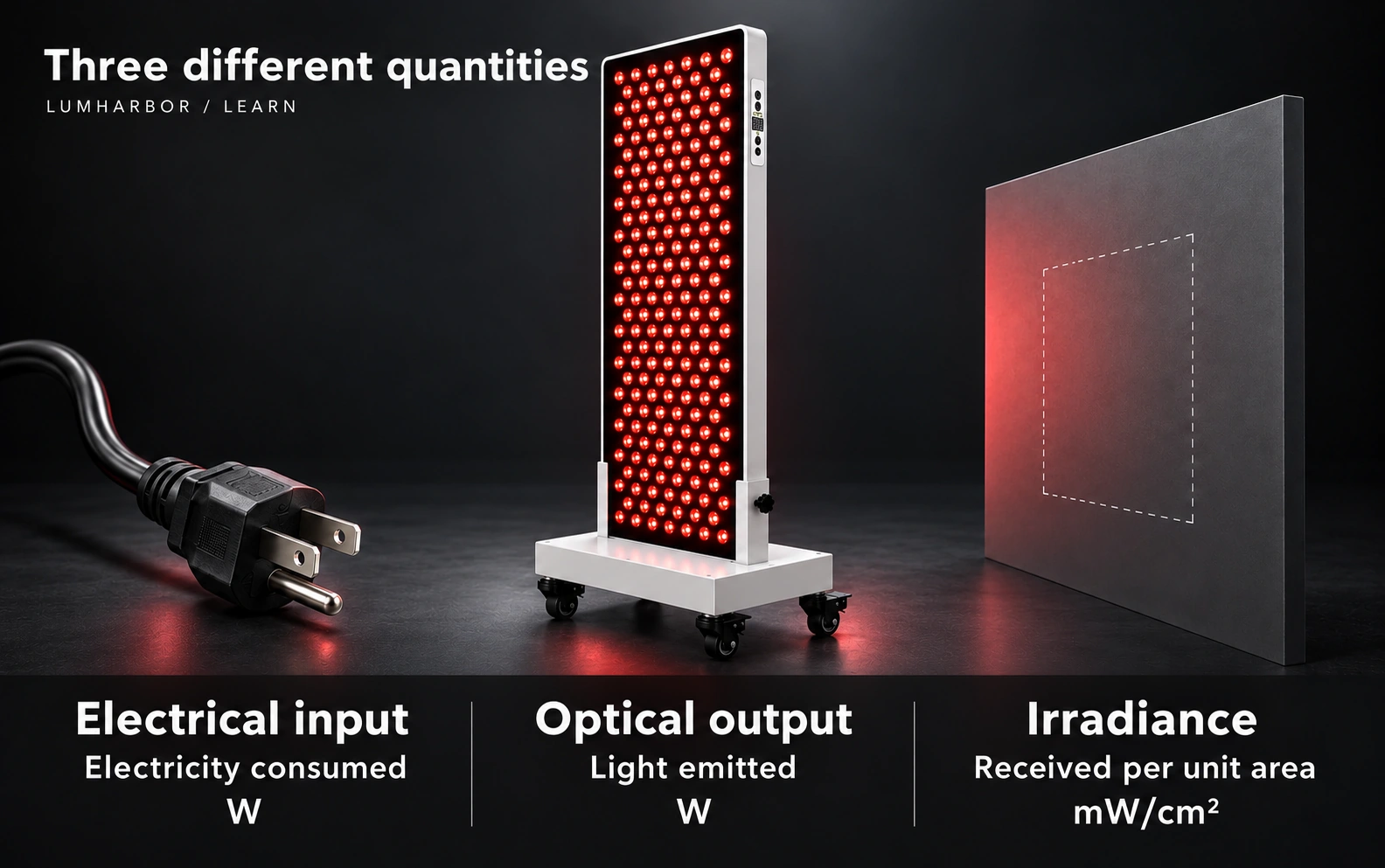
Read the specifications as separate quantities
A red light therapy panel may list several numbers with similar-sounding descriptions. Start by identifying the quantity and unit, then ask what the number actually represents.
| Specification | What it describes | What to ask |
|---|---|---|
| Electrical input, in watts | Electricity consumed by the equipment | Is this actual consumption or a component rating? |
| Optical output, in watts | Radiant power emitted as light | What was measured, in which operating mode? |
| Irradiance, often in mW/cm² | Radiant power received per unit area | At what distance, position, and measurement conditions? |
| Wavelength, in nanometers | The spectral label of the light | Is this a listed value or a measured spectral report? |
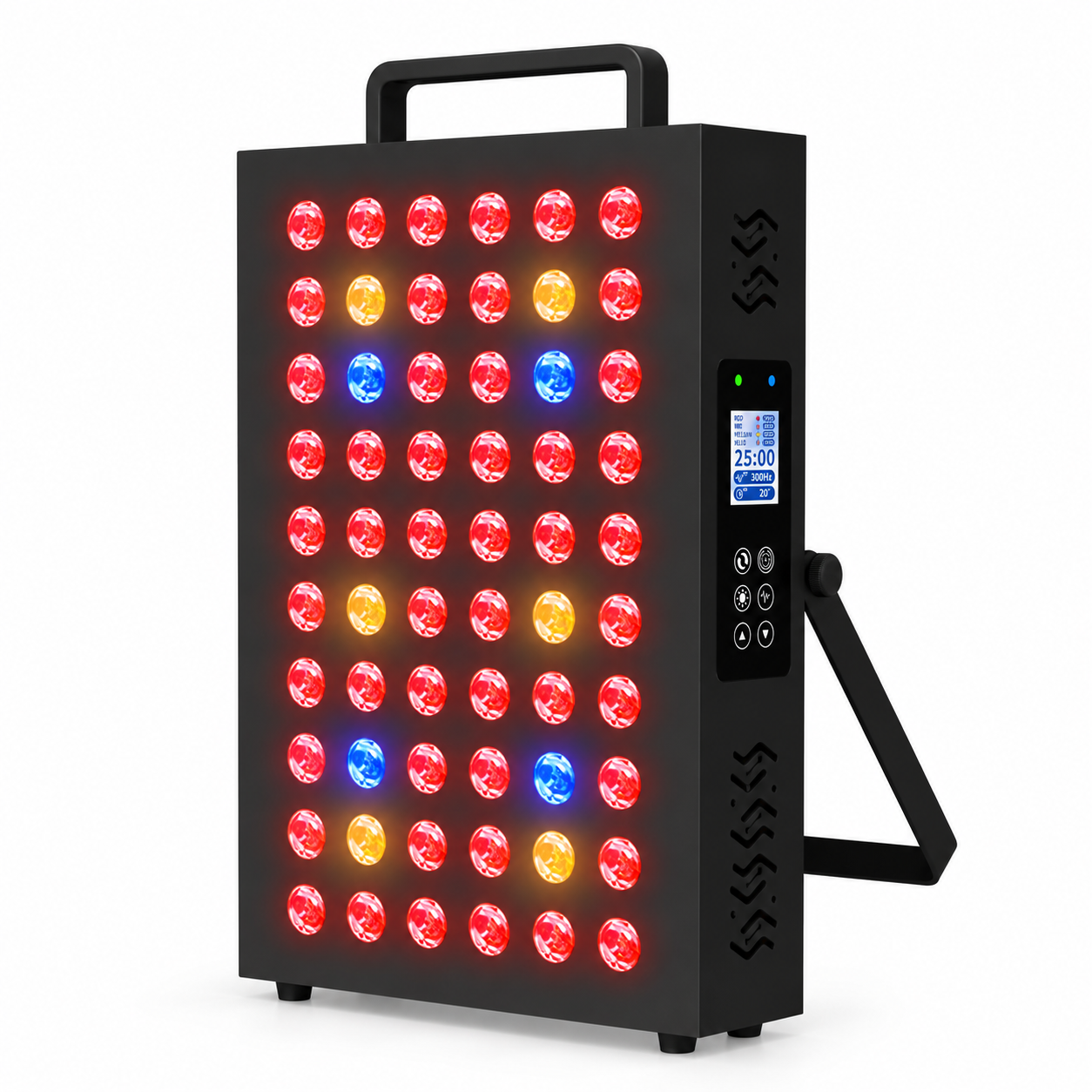
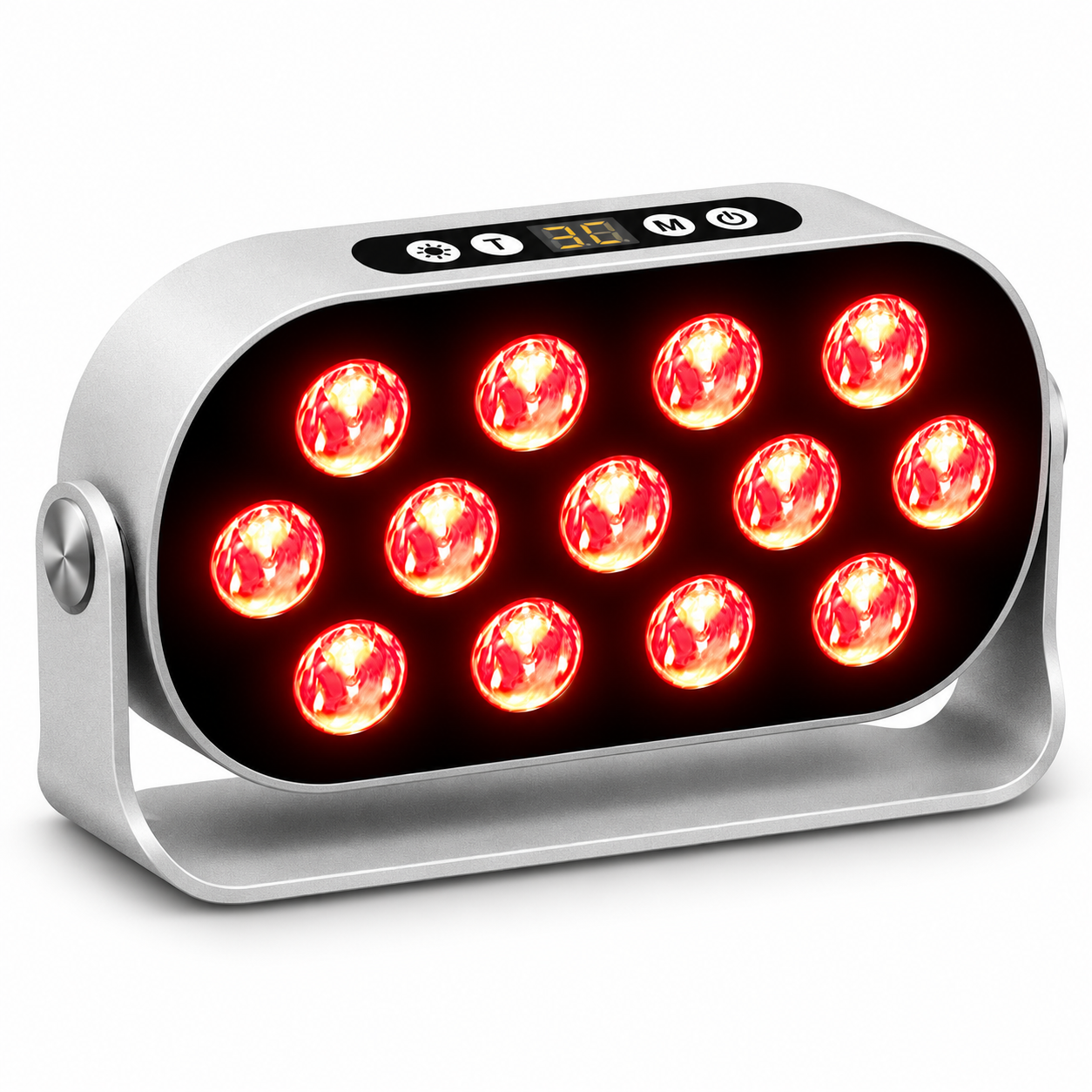
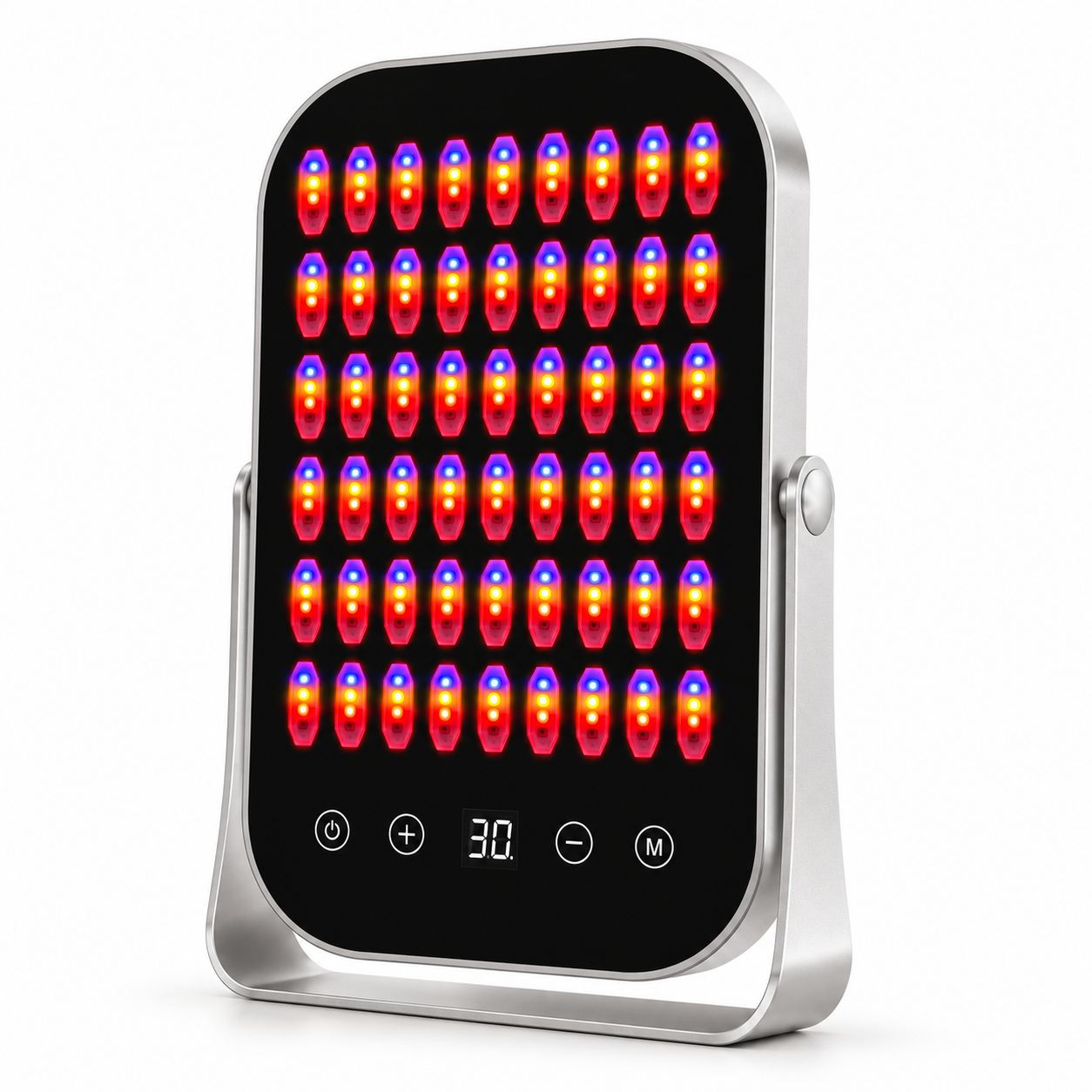
| LED count | The number of listed light-emitting elements | Which configuration does the count describe? |
These fields answer different questions. Multiplying the number of LEDs by a component’s watt rating does not tell you the irradiance received at your body. Likewise, an electrical wattage figure is not a measurement of optical output. Keep the original label attached to each value when comparing listings.
If a product offers separate channels, adjustable output or pulsing, ask which setting the measurement describes. For the spectral part of the comparison, see what wavelength labels tell you.
Ask how irradiance was measured
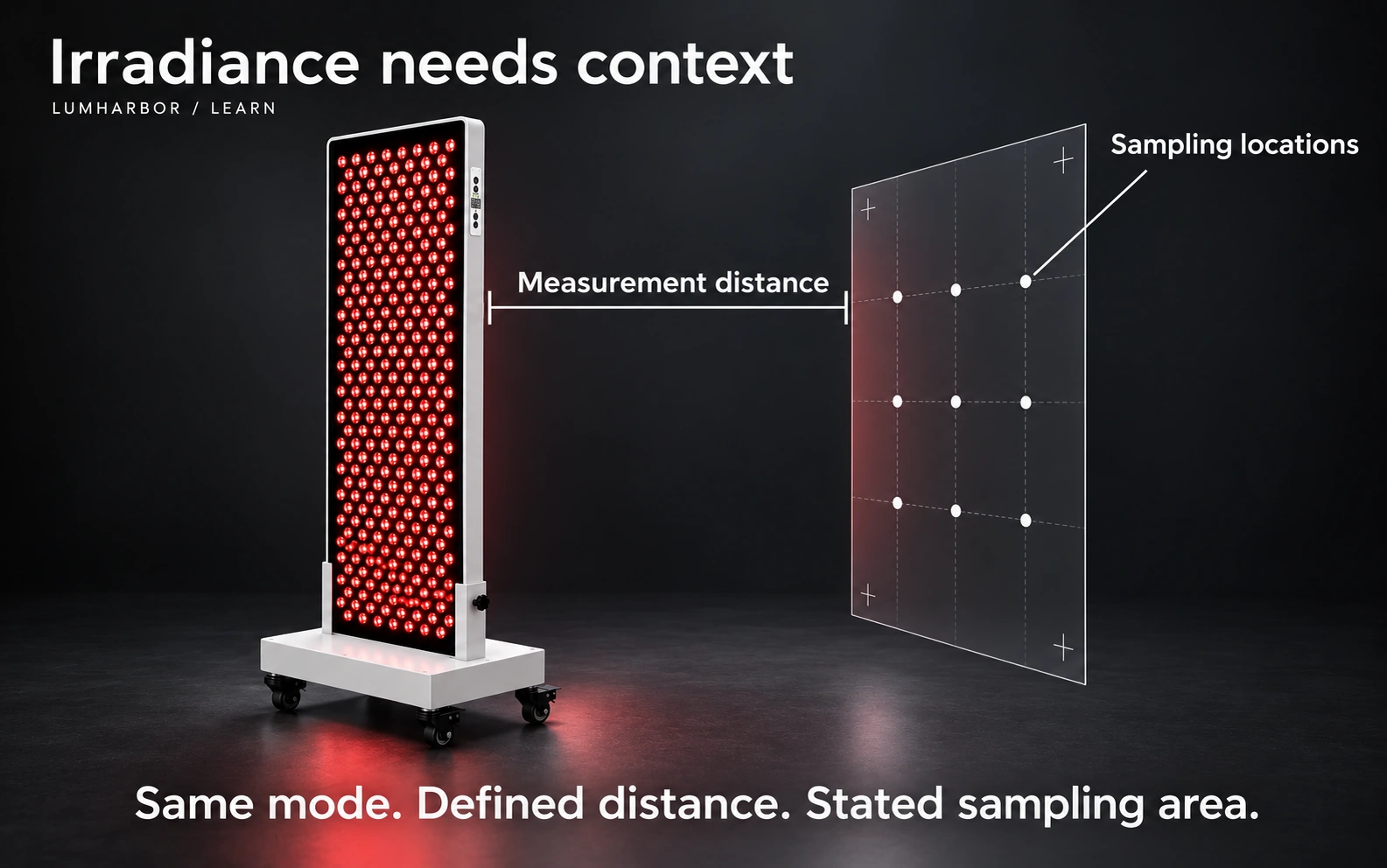
An irradiance figure becomes more useful when the seller supplies its context. For a red light therapy panel, request the measurement distance, operating mode, instrument and method, and where readings were taken across the target area.
A center or peak reading cannot establish that the same irradiance is received everywhere. A spatial map can show how readings vary across a specified area, provided its distance, settings, and measurement method are stated. Panel housing dimensions and the illuminated area at a particular position are different pieces of information.
The technical review The dark art of light measurement explains why geometry, spatial distribution, and appropriate measurements matter. Its reporting findings concern older research papers; they are not a test of today’s consumer panels or LumHarbor products.
When measurement conditions differ or are missing, mark the figures “not yet comparable” and request the missing information. Our guide to reading irradiance claims explains center readings, area averages and time averages. Unknown output should remain unknown; do not invent a correction factor.
Why a dose calculator cannot choose your routine
For constant irradiance, multiplying irradiance by exposure time gives radiant exposure. That arithmetic does not prove that two different intensity-and-time combinations produce the same biological result. A higher number therefore does not establish that you should shorten a session proportionally. Use the supplied instructions and appropriate clinical advice rather than converting marketing specifications into a personal schedule.
Match the complete setup to your space
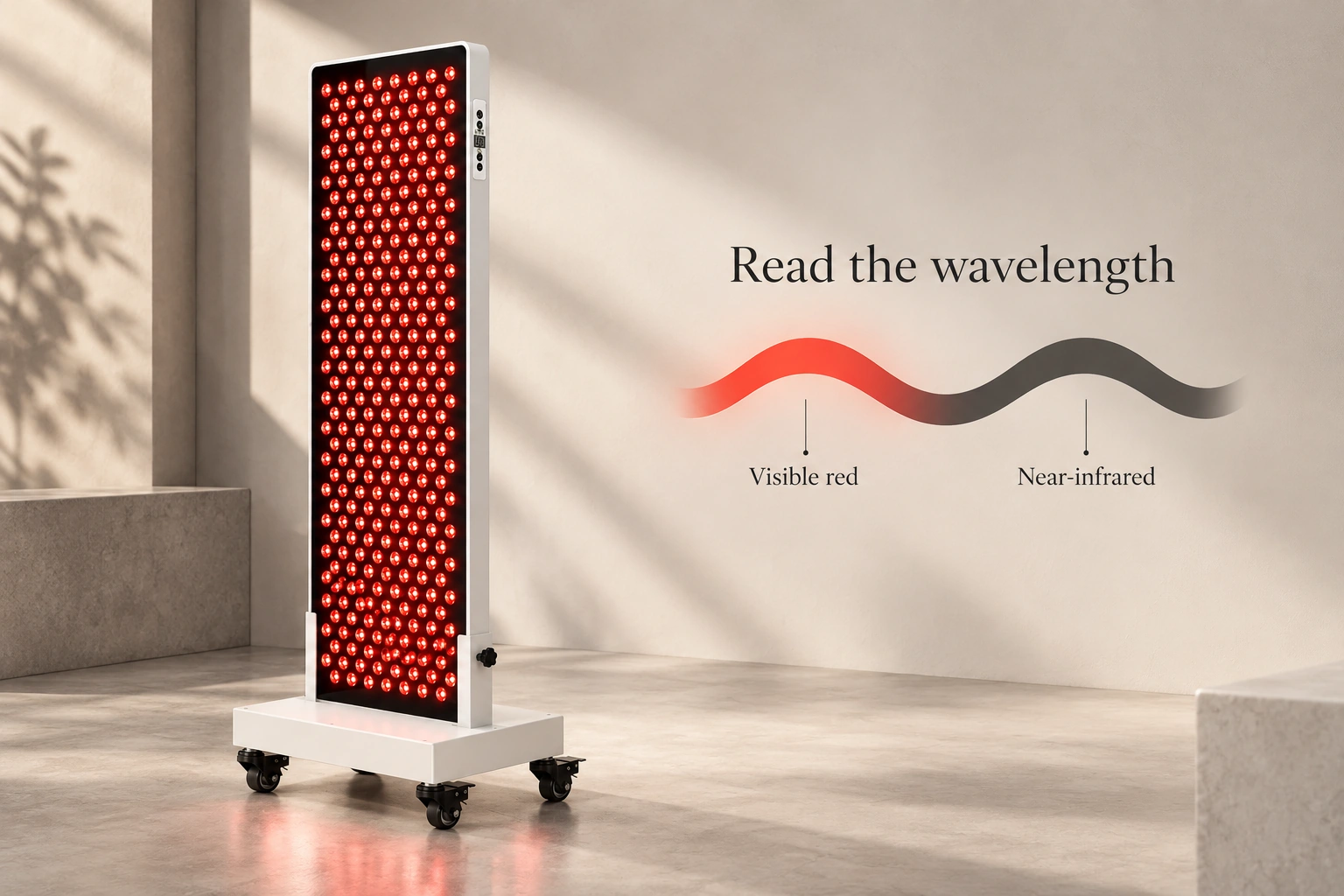
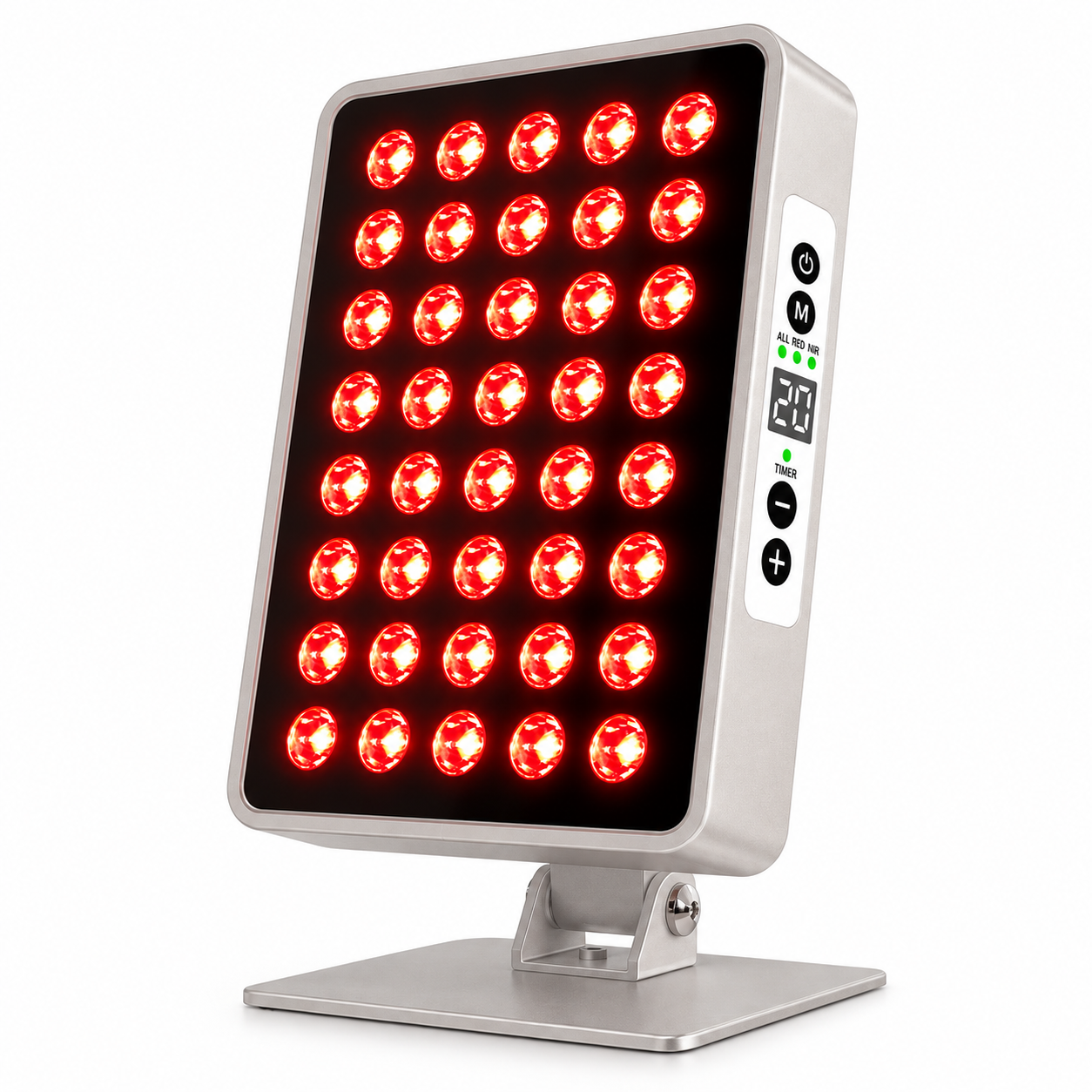
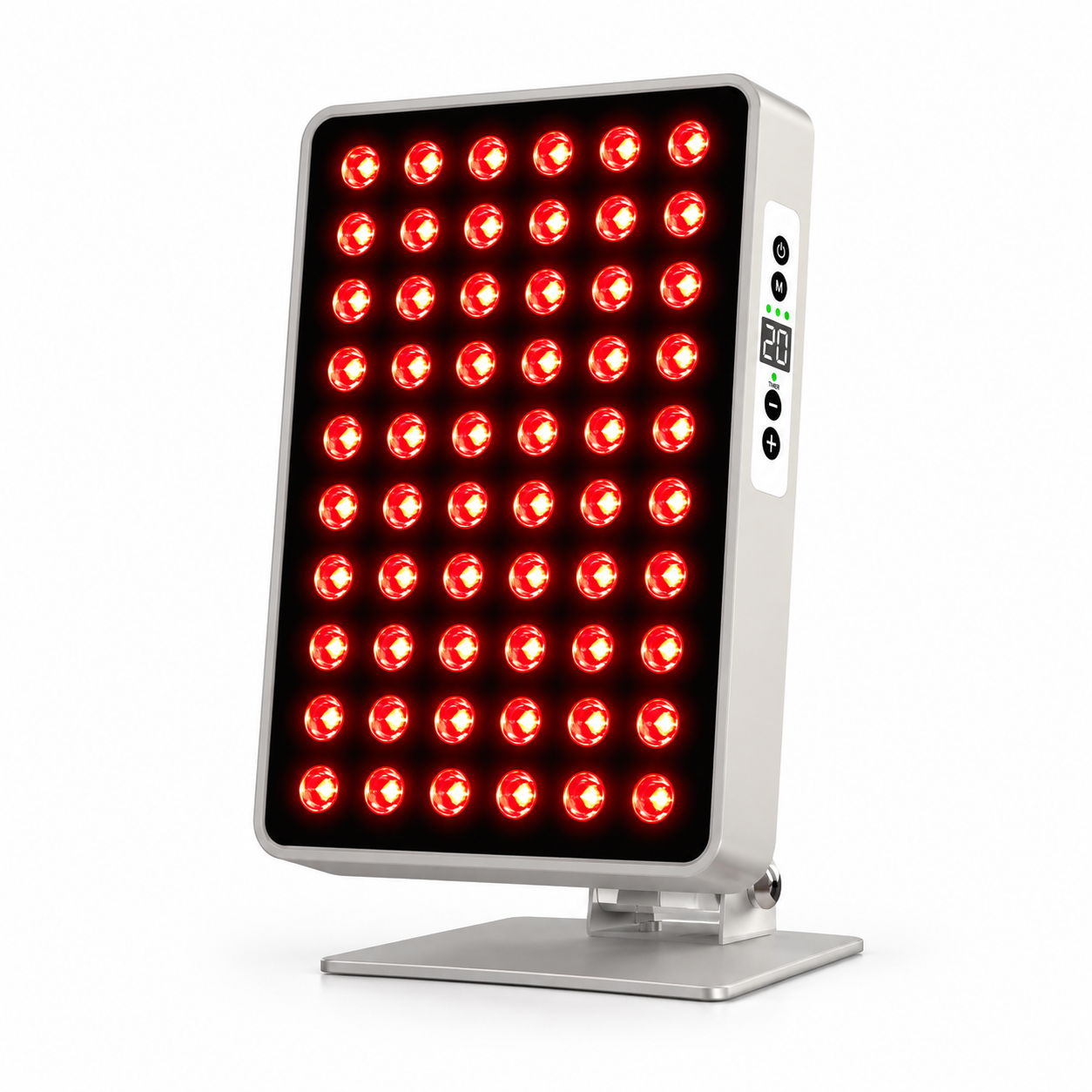
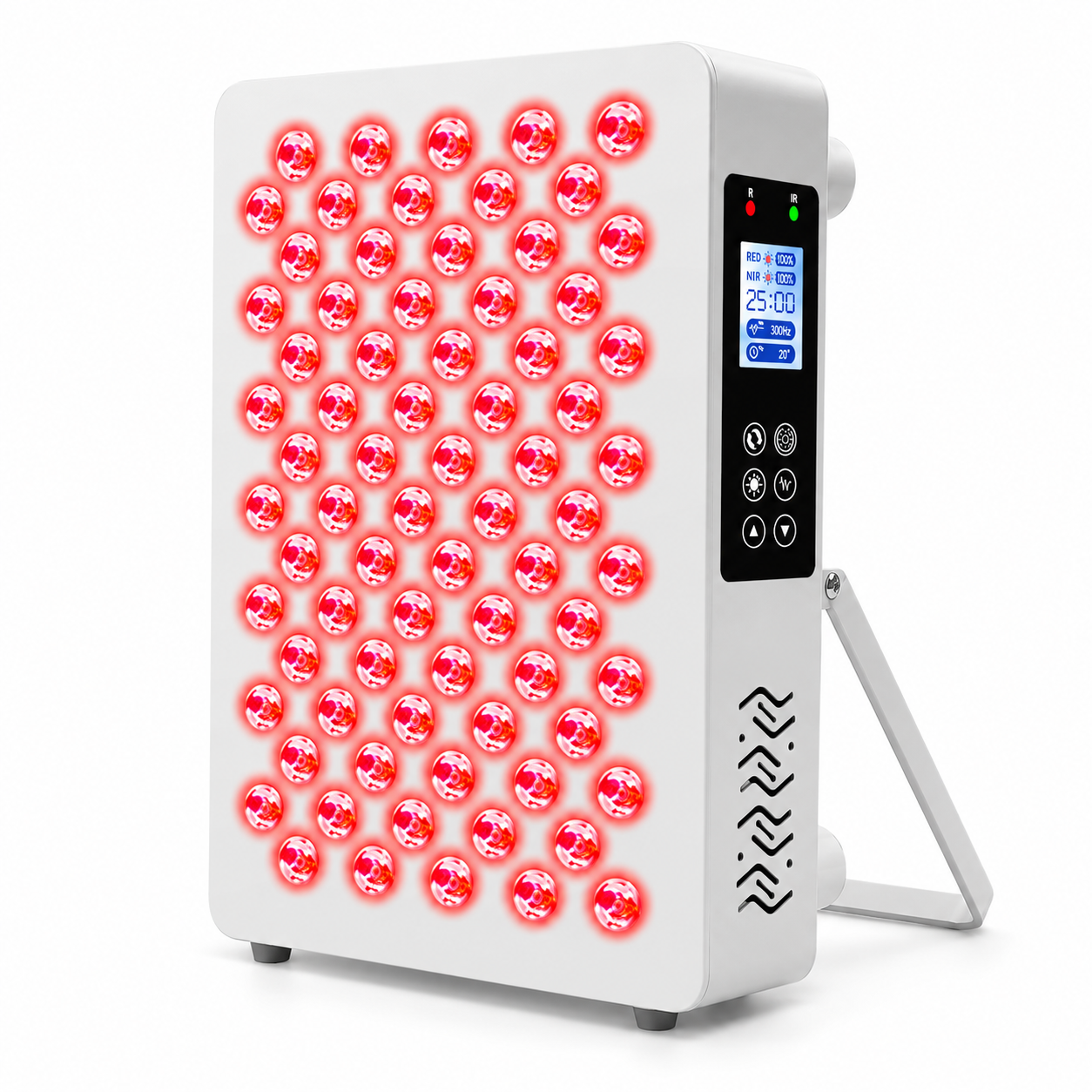
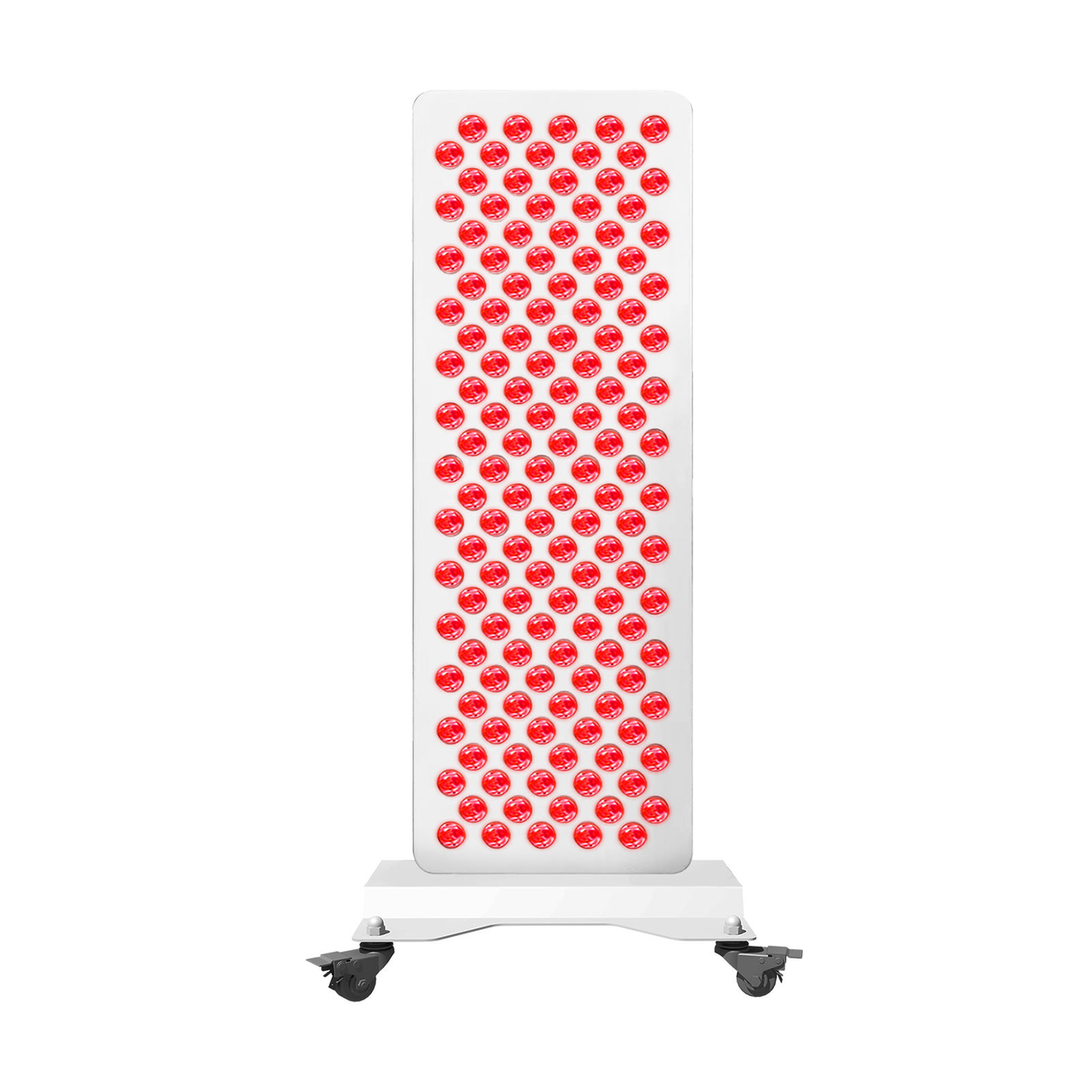
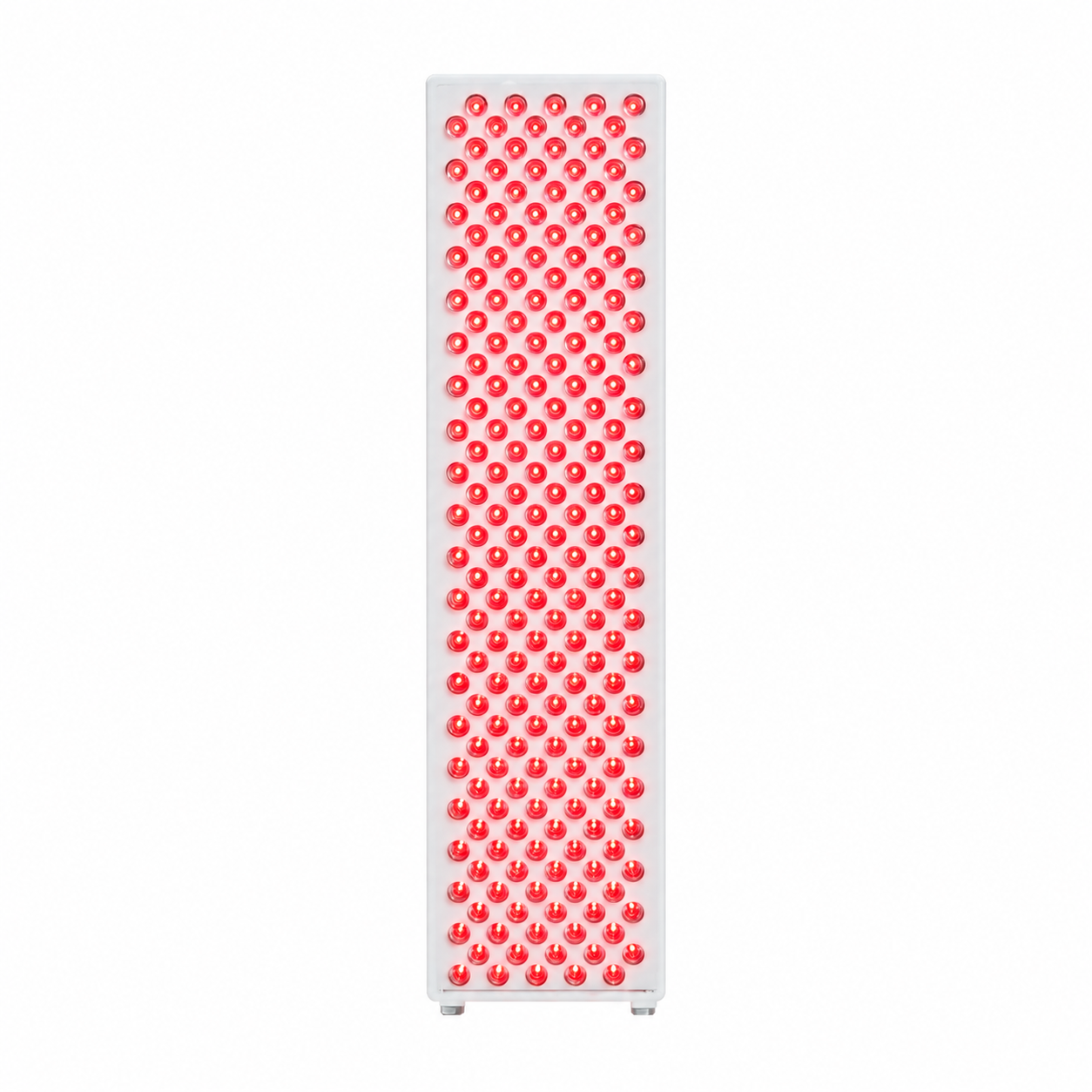
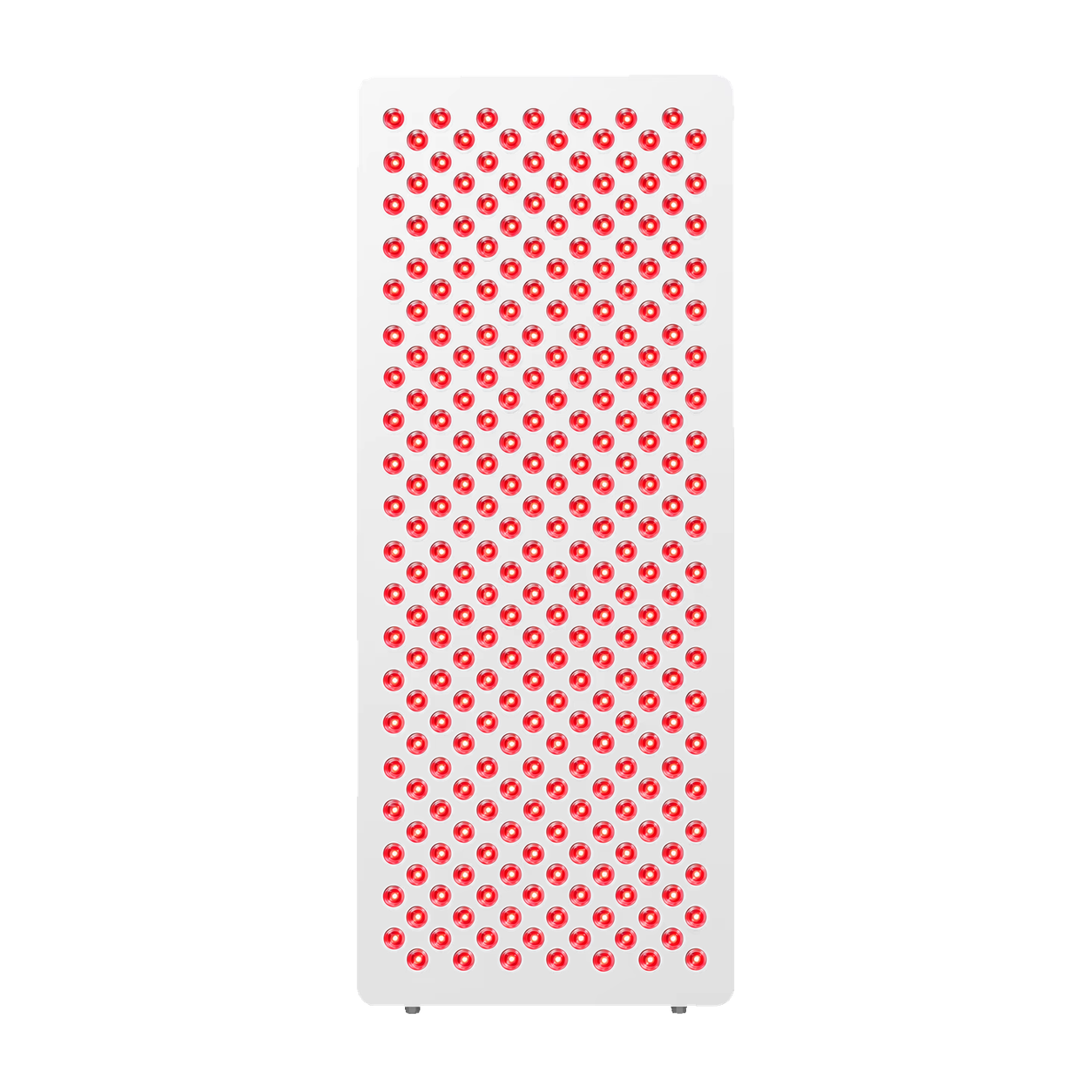
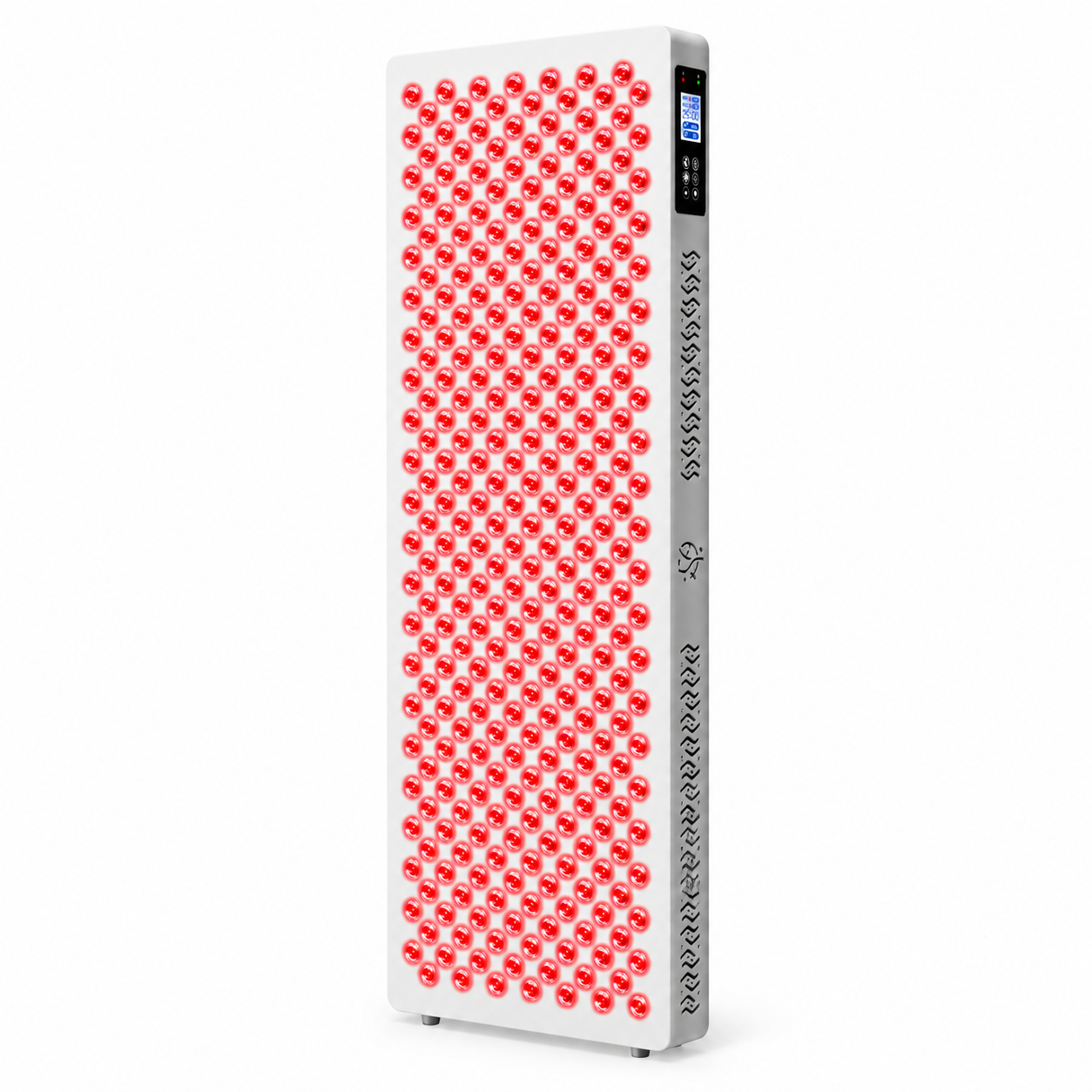
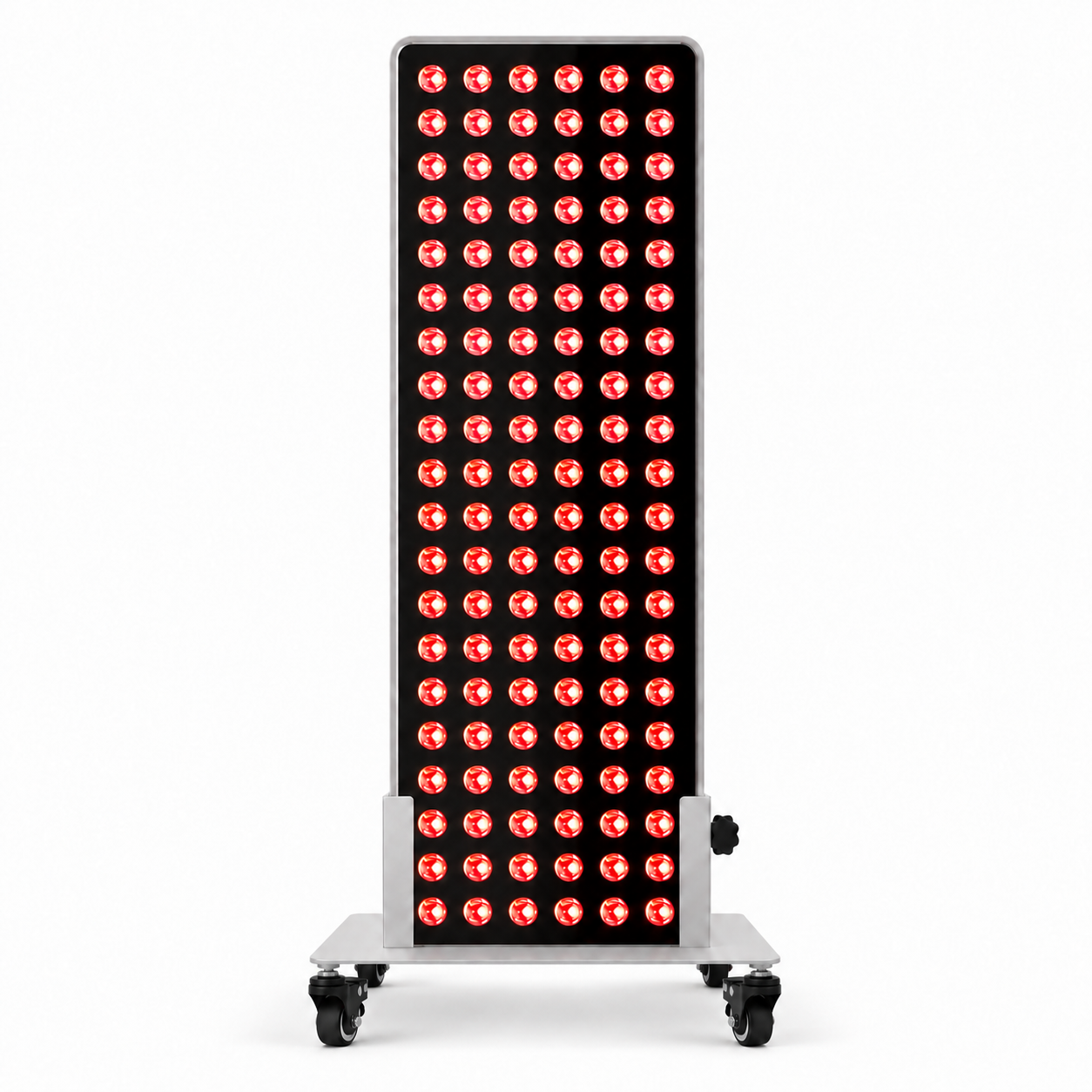
Choose a red light therapy panel you can position as its instructions describe. Check assembled dimensions, supported mounting or stand arrangements, access to controls, and room for use and storage. Confirm which hardware is included; a photograph alone does not establish the contents of the order.
Distinguish panel-body dimensions from packaging or the complete installation. Resolve conflicting documents before relying on a measurement. Our panel-size guide covers physical fit, while the placement and setup guide helps organize the remaining questions.
A worked comparison: shortlist the setup that fits
Hypothetical example: You need a floor-standing arrangement because wall mounting is unavailable. The following fictional documentation illustrates a buying decision; it describes no LumHarbor model or measured product output.
| Question | Setup A documents | Setup B documents |
|---|---|---|
| Can it meet the mounting requirement? | A compatible floor stand is listed as included. | Only wall mounting is documented. |
| Can it fit the available space? | Assembled dimensions are supplied; compare them with your space. | Only panel-body dimensions are supplied. |
| Can the irradiance figures be ranked? | A center reading at a stated distance. | An area average at a different distance. |
Decision: Setup A is the more relevant option to investigate for this mounting requirement. Check its documented dimensions and directions against the space before committing. Setup B does not yet demonstrate a suitable arrangement; request an approved alternative if you still want to consider it.
The irradiance figures do not establish an optical winner because they describe different measurement situations. This comparison narrows the physical shortlist without assigning a clinical-effectiveness score.
Check the evidence behind a claim
A red light therapy panel does not become equivalent to a research device just because both list the same wavelength. The Jenkins and Carroll reporting-guidance abstract identifies several parameters needed to describe a reproducible intervention, including power, exposure time, exposed area, pulse parameters, location, treatment count, and intervals. A wavelength list is only part of that description.
For an outcome claim, identify the supporting study and compare its device, participants, procedure and measured outcome with what is advertised. A specification sheet documents features; it supplies no clinical result by itself.
Read U.S. regulatory wording carefully
If a seller makes a U.S. FDA claim, check the exact device and underlying official record. The FDA explains that registration and listing do not denote clearance or approval.
Clearance and approval are distinct pathways. The FDA’s overview of device approvals and clearances describes 510(k) substantial equivalence and PMA approval. Read any determination in relation to the device’s intended use; it is not a promise of an individual result. This guide does not establish regulatory status for a LumHarbor model or describe the rules of every country.
Check suitability before committing
The American Academy of Dermatology’s home-use guidance recommends discussing skin concerns, light-sensitive conditions, and medicines with a dermatologist. It also advises people with darker skin tones to seek advice because visible-light sensitivity can raise pigmentation concerns. That is a consultation precaution, not a blanket exclusion by skin tone.
Follow the exact device’s instructions and use the eye protection they specify. If protective goggles are required, ordinary sunglasses are not a substitute. For a practical follow-up, read our panel safety guide.
Your pre-purchase checklist
Copy these five items into your notes and record an answer or a specific outstanding question for each:
- Purpose: Exact model, intended use and the original evidence behind the outcome claim.
- Optical information: Quantity, units, operating mode, distance, instrument/method and sampling area.
- Physical fit: Complete installed dimensions, supported arrangement and current directions.
- Order contents: Stand or mount, other included items and anything purchased separately.
- Purchase terms: Current total cost, shipping, return conditions and warranty coverage.
An unanswered field is a reason to request information, not proof of poor performance. Browse the LumHarbor panel range and contact LumHarbor with the exact model and the remaining questions.
Frequently asked questions
Is a larger panel automatically better?
No. Size can affect the physical setup, but housing dimensions alone do not establish exposure coverage or clinical results. Compare documented fit and measurement conditions for your intended use.
Should I choose the highest irradiance number?
First establish whether the figures are comparable. Different distances, settings, instruments, or sampling positions can describe different measurement situations. A higher quoted number is not an evidence-based personal dose recommendation.
Are more wavelengths worth paying for?
A wavelength count does not answer that by itself. Ask what the added feature changes, how its output is documented, and what evidence supports the particular intended use. This guide does not establish an optimal set of wavelengths.
What if the seller cannot provide a report?
Record the limitation and decide whether you have enough information for the decision you are making. Avoid filling the gap with a reviewer’s estimate, a photograph, or a specification from another model.
Make the decision in two passes
First, shortlist a red light therapy panel whose documented setup meets your requirements. Then assess its optical information, supporting evidence and current purchase terms. Resolve gaps that matter to your decision before treating a headline specification as a reason to buy.
About this guide: Prepared by LumHarbor with AI-assisted research and editing, using selected technical papers and official guidance. The hypothetical comparison illustrates documentation and fit, not a test of a named model. Editorial update: 15 October 2026.